

 See My Latest Article on HelloNation
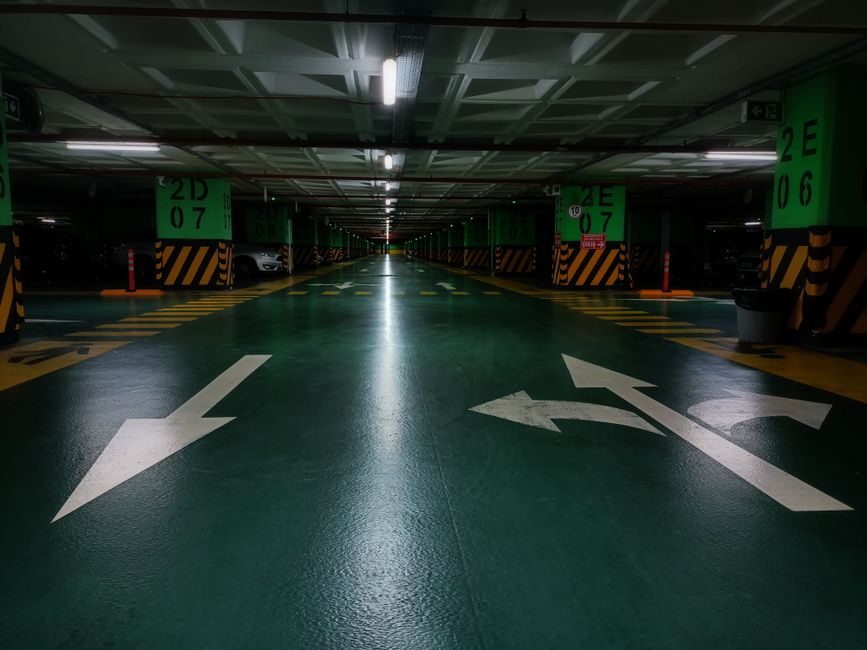
Garage floor coatings are not interchangeable. Epoxy and polyurea can both create a cleaner, more durable surface than bare concrete, but they differ in installation conditions, flexibility, appearance, curing time, and tolerance for moisture.
For many households, epoxy offers strong value and a longer working time during installation. Polyurea generally offers faster curing and greater flexibility, which can be useful in a warm, humid coastal environment. The better choice depends less on the product name than on the garage’s moisture conditions, concrete quality, sunlight exposure, and intended use.
What is the basic difference between epoxy and polyurea?
Epoxy is a resin-based coating that chemically bonds to prepared concrete and cures into a hard, relatively rigid surface. Polyurea is an elastomeric coating that cures more quickly and remains more flexible after installation.
That difference affects how each material behaves:
- Epoxy is usually thicker, hard-wearing, and available in many colors and decorative finishes.
- Polyurea generally cures faster, tolerates a broader range of temperatures, and is less rigid.
- Epoxy often provides more working time for spreading and decorative broadcasting.
- Polyurea requires faster, more controlled application because it can set rapidly.
- Neither coating can compensate for poorly prepared or damp concrete.
The coating is only one part of a garage-floor system. Surface preparation, crack repair, moisture testing, primer selection, broadcast materials, and the topcoat all influence the finished result.
Is epoxy or polyurea more durable?
Both can be durable when correctly matched to the concrete and installed under suitable conditions. Polyurea often has an advantage where the slab experiences movement, temperature changes, or impact because its flexibility can reduce stress between the coating and concrete.
Epoxy remains a durable option for typical residential garages. It resists abrasion, automotive fluids, road grime, and many household chemicals. Its rigid nature can also help create a smooth, substantial surface that is easy to clean.
Durability is not determined by flexibility alone. A coating can fail because of:
- Dust, oil, paint, or curing compounds left on the concrete
- Moisture vapor moving through the slab
- Cracks that were filled incorrectly or not treated
- Inadequate mechanical preparation
- Applying the material outside its temperature or humidity limits
- Driving on the surface before it has fully cured
A properly prepared epoxy floor may outperform a poorly prepared polyurea floor. Installation quality and concrete conditions matter at least as much as the coating chemistry.
Which coating handles Charleston’s climate better?
Polyurea may have a practical advantage in Charleston, SC because garages regularly face warm temperatures, high humidity, heavy rain, and moisture tracked in by vehicles. Polyurea systems are commonly formulated to cure quickly and remain more flexible than epoxy.
However, humidity is not automatically helpful. Excess moisture in the concrete can interfere with bonding, create bubbling, or contribute to delamination. A garage may appear dry while vapor is still moving through the slab from the soil below.
The timing of installation also matters. A hot, humid day can shorten the working time of fast-curing products. A closed garage with limited ventilation may also retain moisture and odors. Concrete temperature, indoor humidity, and the slab’s moisture condition should be evaluated together rather than relying only on the outdoor forecast.
Epoxy can perform well in the local climate when the slab is sufficiently dry, the surface is prepared correctly, and the product is applied within its specified conditions. Climate does not make epoxy unsuitable, but it makes moisture control especially important.
Does polyurea cure faster than epoxy?
Usually, yes. Many polyurea systems can accept light foot traffic within a shorter period than conventional epoxy, although the exact time depends on the product, temperature, humidity, film thickness, and ventilation.
Fast curing can be useful when a household needs to return the garage to service quickly. It also reduces the time dust, insects, leaves, or tracked-in debris can land on the wet coating.
The tradeoff is a shorter application window. Polyurea can become difficult to spread or blend once it begins setting. Decorative flakes must be broadcast promptly, and mistakes may be harder to correct.
Epoxy generally cures more slowly. That longer cure can be inconvenient, but it may provide more time for careful placement and leveling. A floor should not be used simply because it feels dry. Foot traffic, vehicle traffic, heavy storage, and chemical exposure may each require different waiting periods.
Which coating looks better over time?
Epoxy often provides a deep, glossy appearance and can be tinted or combined with decorative flakes. It is commonly selected when appearance is a major consideration and the garage is used as a workshop, storage area, or multipurpose room.
Polyurea itself is not automatically more attractive. In many garage systems, it serves as a basecoat beneath decorative flakes and a UV-resistant topcoat. The final appearance depends on the complete system, not just the first layer placed on the concrete.
Sunlight can affect some coating formulations, particularly in garages with open doors, windows, or strong afternoon exposure. Certain epoxy products may yellow or lose color stability under prolonged ultraviolet exposure. A compatible UV-resistant topcoat can reduce that risk, but product specifications should be checked rather than assumed.
Is one coating better for cracks and shifting concrete?
Polyurea is generally more forgiving of minor movement because it is more flexible. That does not mean it will bridge every crack or prevent future cracking.
Cracks may result from shrinkage, settlement, structural movement, moisture, or changes in the slab. A coating can hide a hairline surface defect for a time, but active or widening cracks may telegraph through the finished floor.
Before coating, cracks should be evaluated according to their size, movement, and cause. Expansion joints should not be filled casually, because they may be designed to accommodate slab movement. Coating over joints without a suitable plan can cause premature splitting or loss of adhesion.
Which option is better for a typical household garage?
For a garage that is dry, stable, and used mainly for parking and storage, either system may be appropriate.
Epoxy may be the better fit when:
- A thicker decorative finish is desired
- The installation schedule allows a longer cure
- The slab has been confirmed to be dry
- Cost control is a major consideration
- The garage has limited ultraviolet exposure
Polyurea may be the better fit when:
- Faster return to service is valuable
- The concrete may experience moderate movement
- The garage is exposed to changing temperatures
- Humidity and seasonal weather make curing conditions variable
- The finished system includes a suitable UV-resistant topcoat
These are general tendencies, not guarantees. Product formulations vary widely, and the label “polyurea” does not reveal the complete performance of a floor system.
What should be checked before choosing?
The most useful questions concern the concrete rather than the coating brochure:
- Is there visible dampness, efflorescence, or a persistent musty odor?
- Does water vapor move through the slab?
- Are cracks stable or continuing to open?
- Has the floor been painted, sealed, or contaminated with oil?
- Will vehicles bring in rainwater, mud, sand, or deicing residue?
- Will the garage door remain open to sunlight for much of the day?
- How quickly must the space return to service?
- Is slip resistance needed near entry doors or work areas?
A textured finish can improve traction, especially where rainwater is tracked indoors. The texture should remain cleanable; an overly rough surface can trap dirt and make maintenance harder.
For most Charleston garages, the practical decision is not simply “epoxy versus polyurea.” It is whether the concrete is suitable, whether moisture has been addressed, and whether the entire coating system matches the garage’s exposure and use. Polyurea often offers advantages in speed and flexibility, while epoxy remains a sound choice when a controlled installation and substantial decorative finish are the priorities.