

 See My Latest Article on HelloNation
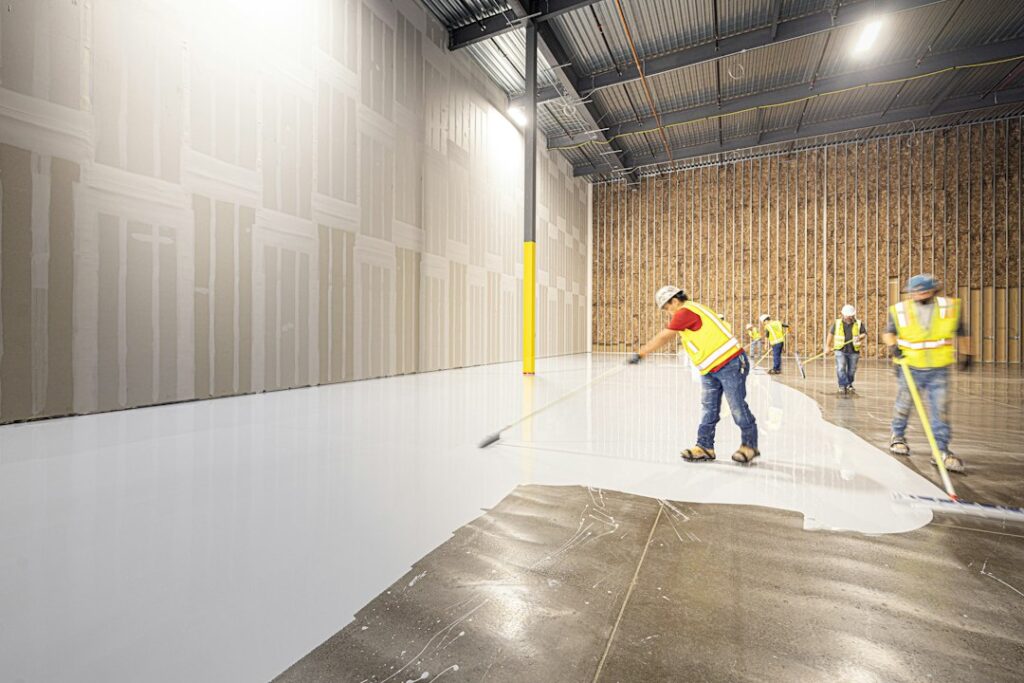
Epoxy flooring can be a practical choice for some areas of a home, especially garages, workshops, utility rooms, and covered patios. It creates a seamless, hard-wearing surface that is easier to clean than unfinished concrete. However, epoxy is not automatically the right solution for every room or every concrete slab.
The best decision depends on moisture conditions, sunlight, surface preparation, expected use, and whether the existing floor is structurally sound.
What is epoxy flooring?
Epoxy flooring is a coating system made by combining resin with a hardening component. Once mixed and applied to prepared concrete, the material cures into a dense surface that bonds to the slab.
Some systems are thin coatings, while others include multiple layers, decorative flakes, textured additives, or thicker resin-based applications. The final result can range from a smooth, glossy finish to a more slip-resistant surface with a lightly textured appearance.
Epoxy is most commonly associated with garages, but it may also be used on:
- Workshop floors
- Storage areas
- Laundry or utility rooms
- Enclosed porches
- Covered outdoor living areas
- Concrete basement or ground-level floors
It is generally better suited to concrete than to wood, carpet, tile, or surfaces that move significantly.
What are the main advantages?
Epoxy flooring offers several practical benefits for households that want a durable, low-maintenance concrete surface.
Easier cleaning
A properly cured epoxy surface has few seams and does not absorb ordinary spills as readily as unfinished concrete. Dust, dirt, mud, and vehicle fluids can usually be removed with routine sweeping and damp mopping.
This can be useful in garages where sand, soil, lawn debris, and water may be tracked indoors. Smooth surfaces also make it easier to see spills before they become staining problems.
Resistance to everyday wear
Epoxy can withstand vehicle traffic, foot traffic, storage containers, bicycles, tools, and many common household activities. It is more resistant to abrasion and staining than bare concrete, although it is not indestructible.
Sharp metal edges, dragged equipment, heavy impacts, and abrasive grit can eventually scratch or damage the finish. The coating’s performance depends heavily on the quality of the concrete and the preparation beneath it.
A more finished appearance
Epoxy can give a plain slab a consistent, finished look without adding grout joints or many of the seams found in other flooring materials. Decorative flakes or subtle color variations may also help conceal small amounts of dust and everyday wear.
This does not mean the floor will hide major cracks, uneven areas, or moisture problems. Surface defects may remain visible through the coating if they are not addressed beforehand.
Protection for the concrete below
A coating can reduce direct exposure to water, dirt, salts, and certain chemicals. In a garage or utility area, that added barrier may help limit staining and make routine maintenance less demanding.
The coating is not a substitute for drainage, structural repairs, or moisture control. Water that enters from beneath the slab can still create problems.
What are the disadvantages?
Epoxy flooring has limitations that are easy to overlook when focusing only on its durability and appearance.
Preparation is demanding
The concrete must be clean, dry, and free from substances that interfere with bonding. Oil, grease, paint residue, curing compounds, dust, and loose concrete can all contribute to peeling or premature failure.
Cracks and damaged areas may also need repair. Applying epoxy over a poorly prepared slab may produce a surface that looks acceptable at first but begins to blister, flake, or detach later.
Moisture can cause failure
Moisture is one of the most significant concerns for concrete coatings. Water vapor can move upward through a slab, particularly where drainage, grading, groundwater, or poor ventilation contributes to damp conditions.
A floor may appear dry on the surface while still releasing enough moisture to interfere with the coating. Charleston’s humid climate, seasonal rain, coastal air, and occasional storm-related moisture make this issue especially relevant for garages and ground-level rooms.
A coating should not be treated as a waterproofing system unless it has been specifically designed and installed for that purpose. Even then, water pressure beneath a slab can exceed what the coating can handle.
Sunlight may affect the finish
Many epoxy products can change color, yellow, or lose gloss after prolonged exposure to ultraviolet light. This matters in rooms with large windows, open-sided structures, screened areas, and patios that receive direct sun.
Some systems use a separate ultraviolet-resistant topcoat, but that does not make every epoxy suitable for full-time outdoor exposure. A product intended for an enclosed garage may not perform well on an uncovered or brightly sunlit surface.
The floor may become slippery
Smooth epoxy can be slick when wet. Rainwater, vehicle moisture, cleaning solution, or damp footwear can reduce traction.
Textured additives can improve slip resistance, but they may also make the surface slightly harder to sweep and clean. The right balance depends on how the space is used. A garage that frequently receives wet vehicles may need more texture than a dry storage room.
Repairs may be noticeable
If the coating is chipped, worn, or damaged by impact, a spot repair may not blend perfectly with the surrounding surface. Color variation, gloss differences, and edge visibility can occur.
This is a practical consideration in active garages and workshops where tools, jacks, shelving, or heavy objects may fall or move across the floor.
Is epoxy suitable for garages in Charleston?
Epoxy can work well in a garage if the slab is sound, moisture is controlled, and the coating is protected from excessive sunlight. It is often most practical in enclosed garages where the floor mainly receives vehicle traffic, foot traffic, stored items, and occasional spills.

Before choosing it, consider:
- Whether water enters during heavy rain
- Whether the slab has recurring damp spots
- Whether the garage is enclosed or exposed to direct sun
- Whether vehicles bring in sand, mud, or standing water
- Whether the floor has active cracks or uneven areas
- Whether the surface can be kept dry during installation and curing
A garage with drainage problems may need those conditions addressed before any coating is considered.
Can epoxy be used inside living areas?
Epoxy is possible in some interior spaces, but it may not provide the warmth, sound absorption, or visual softness many households expect in bedrooms, living rooms, or hallways.
It may make sense in a utility room, mudroom, workshop, or durable service area. In living spaces, the hard surface can feel cold underfoot and may amplify sound. Furniture movement, dropped objects, and changes in temperature can also affect long-term appearance.
Flooring choices should reflect how the room is used, not only how easy the surface is to clean.
How long can epoxy flooring last?
The lifespan varies widely. A well-prepared, lightly used indoor or enclosed garage floor may remain serviceable for many years. Heavy traffic, direct sunlight, moisture beneath the slab, chemical exposure, and impact can shorten that period.
The coating itself is only one part of the system. Concrete quality, preparation, primer selection, application conditions, curing time, maintenance, and the type of topcoat all influence performance.
A floor that receives frequent wet traffic or abrasive debris may require more maintenance than a clean, climate-controlled interior space.
What maintenance does epoxy require?
Routine care is relatively simple:
- Sweep regularly to remove grit that can create surface scratches.
- Clean spills promptly, especially oils and chemicals.
- Use a mild cleaner that does not leave a heavy residue.
- Avoid dragging sharp or metal-edged objects across the floor.
- Use protective pads beneath heavy equipment or storage racks.
- Check for peeling, cracks, or areas where water repeatedly collects.
Avoid assuming that a glossy finish is automatically slip-resistant or chemical-proof. Those characteristics depend on the complete coating system.
When is epoxy probably not the right choice?
Epoxy may be a poor fit when the concrete has persistent moisture, active structural movement, severe cracking, or unreliable drainage. It may also be unsuitable where the surface receives constant direct sunlight unless the system is designed for ultraviolet exposure.
For households seeking a softer feel, quieter rooms, or a natural appearance, another flooring material may be more comfortable. The decision should be based on the slab’s condition and the room’s demands rather than appearance alone.
For many Charleston homes, epoxy makes the most sense as a carefully selected surface for an enclosed garage, workshop, or utility area—not as a universal flooring solution for every part of the house.